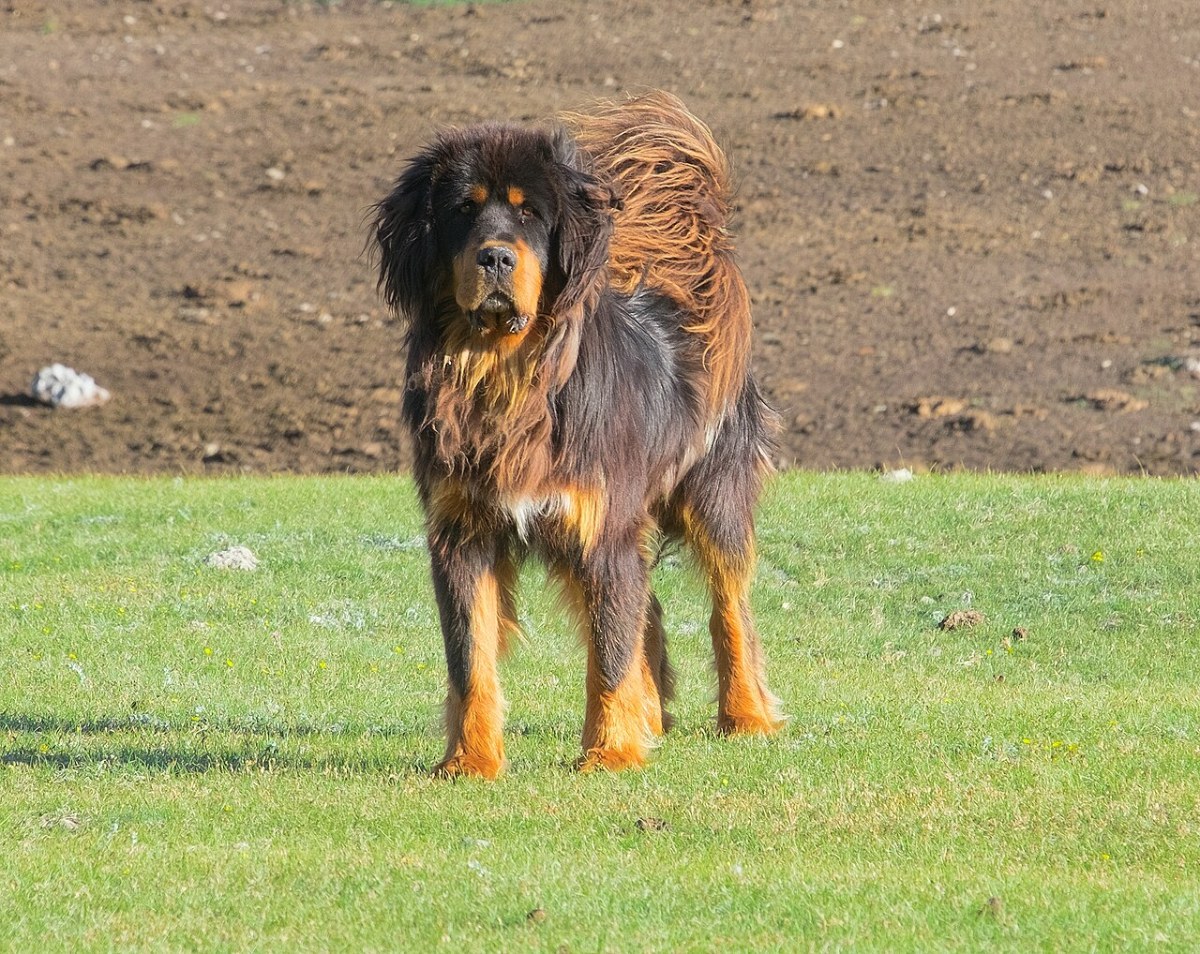
Photo source: Alexandr frolov · CC BY-SA 4.0 · https://commons.wikimedia.org/wiki/File:Tibetan_Mastiff_%D0%A2%D0%B8%D0%B1%D0%B5%D1%82%D1%81%D0%BA%D0%B8%D0%B9_%D0%9C%D0%B0%D1%81%D1%82%D0%B8%D1%84_02.jpg
Tibetan Mastiff
Ancient. Watchful. Quietly devoted.
The Tibetan Mastiff is an ancient giant guardian from the Himalayas, with a thick coat and a mane-like ruff.
Calm and devoted with its family, it is aloof and territorial with strangers.
Quick Snapshot
Where They Come From
Bred by nomadic herders of the high Tibetan plateau to guard homes, livestock and monasteries.
Its Tibetan name, Do Khyi, means tied dog, because it was tethered at the gates it guarded.
Daily Reality
- Needs around an hour of exercise a day
- Copes poorly with heat, so walk early or late
- Sheds its undercoat heavily once a year
Early, steady socialisation helps it tell real threats from welcome guests.
Who This Breed Suits
- Experienced owners of large guardian breeds.
- Homes with a large, securely fenced garden.
- Adult households or families with teenagers.
Not ideal for first-time owners, apartments or homes with young children.
Health Considerations
May be predisposed to:
- Hip and elbow dysplasia
- Hypothyroidism
- Eyelid problems such as entropion
Generally sturdy; ask for hip and elbow screening on the parents and keep up regular check-ups.
Did you know?
A 2016 genetic study found its tolerance of high altitude came partly from ancient interbreeding with Tibetan grey wolves.
Earn its trust and it will guard you for life.