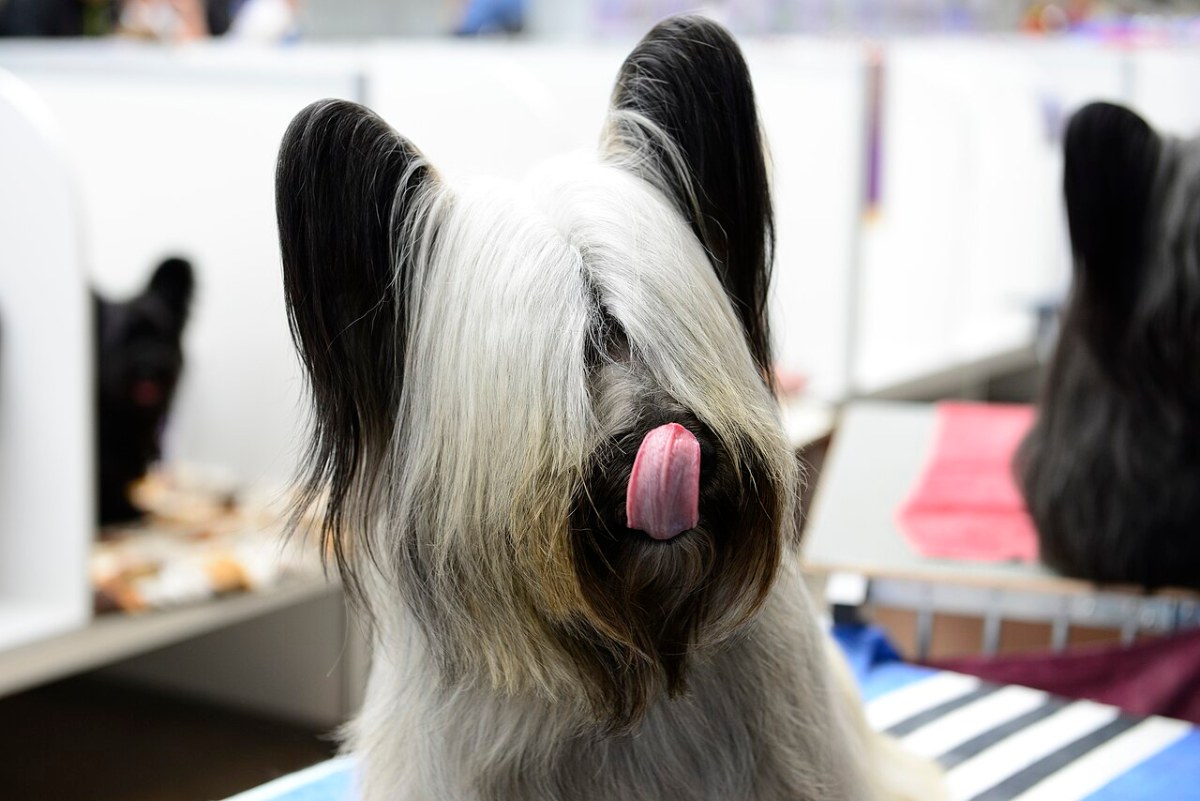
Photo source: Chris Phutully from Australia · CC BY 2.0 · https://commons.wikimedia.org/wiki/File:2013_Royal_Melbourne_Show_(9972389005).jpg
Skye Terrier
Long. Low. Lionhearted.
The Skye Terrier is a long, low terrier whose body is about twice as long as it is tall.
Dignified and devoted, it often bonds closely with one person and is reserved with strangers.
Quick Snapshot
Where They Come From
One of Scotland's oldest terriers, from the Western Isles, it was described in 1570 by Dr John Caius.
Bred to hunt fox and badger, it grew in popularity after Queen Victoria acquired one in 1842.
Daily Reality
- Needs up to an hour of exercise a day
- Long double coat needs brushing several times a week
- Early socialisation helps with strangers
Bold and fearless outdoors, deeply loyal at home.
Who This Breed Suits
- Owners wanting a devoted companion.
- Calm homes with older children.
- People happy to keep up regular grooming.
Not ideal for owners who want a dog that greets every stranger warmly.
Health Considerations
May be predisposed to:
- Skye Terrier liver disease
- Puppy limp (Skye limp)
- Kidney problems
The breed club follows health closely; ask breeders about health testing of the parents and keep up regular check-ups.
Did you know?
Queen Victoria acquired a Skye Terrier in 1842, which helped make the breed popular.
Earn its trust and you will have a friend for life.